Case 25
| Case Number | 25 |
| Charge | Theft |
| Defense Attorney Present | No |
| Interpreter Present | No |
| Racialized Person | Yes |
| Outcome | Fine |
Without a defendant or a lawyer present, the court issues a summary proceedings order, sentencing someone by mail for theft. The prosecution pushes for a harsh punishment and for retaining the charge “theft with a weapon” despite limited evidence of a weapon being present and without obtaining more evidence. Though the judge disagrees with the prosecution's original recommendation for a prison sentence, they sentence the defendant to a high fine of more than 1,300 Euros for stealing food.
Summary proceeding orders make up a large portion of criminal sentences and are often negotiated behind closed doors. In this case, we were able to observe the judge and prosecutor deliberate the summary proceedings order. The case shows how routine it is for courts to sentence people to very high fines with little information, putting them at risk of debt and prison for unpaid fines. It also shows how prosecutors enhance charges to include a weapon, even when the exact nature of the weapon or how and whether it was used is not fully known.
The defendant is absent, so the trial does not follow a regular procedure. Upon entering the courtroom, the judge immediately asks who the courtwatcher is, assuming that the defendant might have entered through the wrong door. When the courtwatcher identifies themselves as a visitor, the judge scoffs at the prosecutor, remarking, “Now we even get an audience for cases like this one”, but otherwise ignores them for the rest of the proceedings.
The charge is theft with a weapon. However, the judge considers a lesser charge, since the alleged theft only involved a small amount of food at a supermarket. The prosecutor, however, had previously discussed the case with a supervisor, who had requested a prison sentence rather than a fine. The alleged weapon is a pair of scissors, but the prosecutor notes that her case file does not include a photograph, so she says she is unsure whether it is a small pair of nail scissors or a larger item.
The judge expresses skepticism about the severity of the charge, stating that a prison sentence seems excessive. He asks the prosecutor to quickly reassess the case with the supervisor. The prosecutor leaves the room to make a call and returns with an adjusted request: a fine of 120 daily rates. The judge suggests reducing it to 90 instead. The prosecutor agrees, as long as the final charge explicitly mentions the weapon.
As the judge dictates the final order for the court record, he notes that the defendant stated during the arrest that they had no money for food. At no point does he raise the issue of whether the defendant would be able to pay the fine.
Cases from our archive
Case 39
A young woman experiencing homelessness is sentenced to 90 days of fine payment for supplying drugs. The conviction will not appear on her Certificate of Good Conduct (Führungszeugnis), which was important to her, but the court punishes her with a high fine even as it acknowledges she was supplying drugs because of her poverty.
Case 38
This case concerned a person currently serving a prison sentence being found with a small quantity of cannabis, an amount that would usually not be prosecuted in Berlin. The person is brought to the court from the prison to stand trial and is sentenced to a €30 fine.
Case 37
A white defendant with access to private counsel is sentenced to a fine for possession of 15 small bags of cannabis, with a total amount of cannabis above the legal threshold for a “low quantity” (nicht geringe Menge). The court accepts her account that the cannabis was for personal use, and justifies the relatively mild sentence with a favorable assessment of the defendant living a “normal bourgeois life”.
Case 36
In a case heard shortly before the 2024 law change that legalized certain forms of cultivation, possession, and acquisition of cannabis in Germany, a young man is accused of selling cannabis via car delivery. Despite the relatively low quantity of cannabis found and the person having childcare responsibilities and financial difficulties, the prosecution recommends a sentence of over a year in prison. In the end, the judge imposes a long probation sentence, severe in light of the impending opening of the cannabis market.
Perspectives

Structures of Anti-Roma Racism: An interview with Amaro Foro’s Valerie Laukat
Justice Collective
Courtwatching often reveals the deep-rooted structures of anti-Roma racism in German public institutions and society. In this interview, we find out more about how anti-Roma racism is embedded in broader structures of exploitation and exclusion – and how to work towards transformative change.
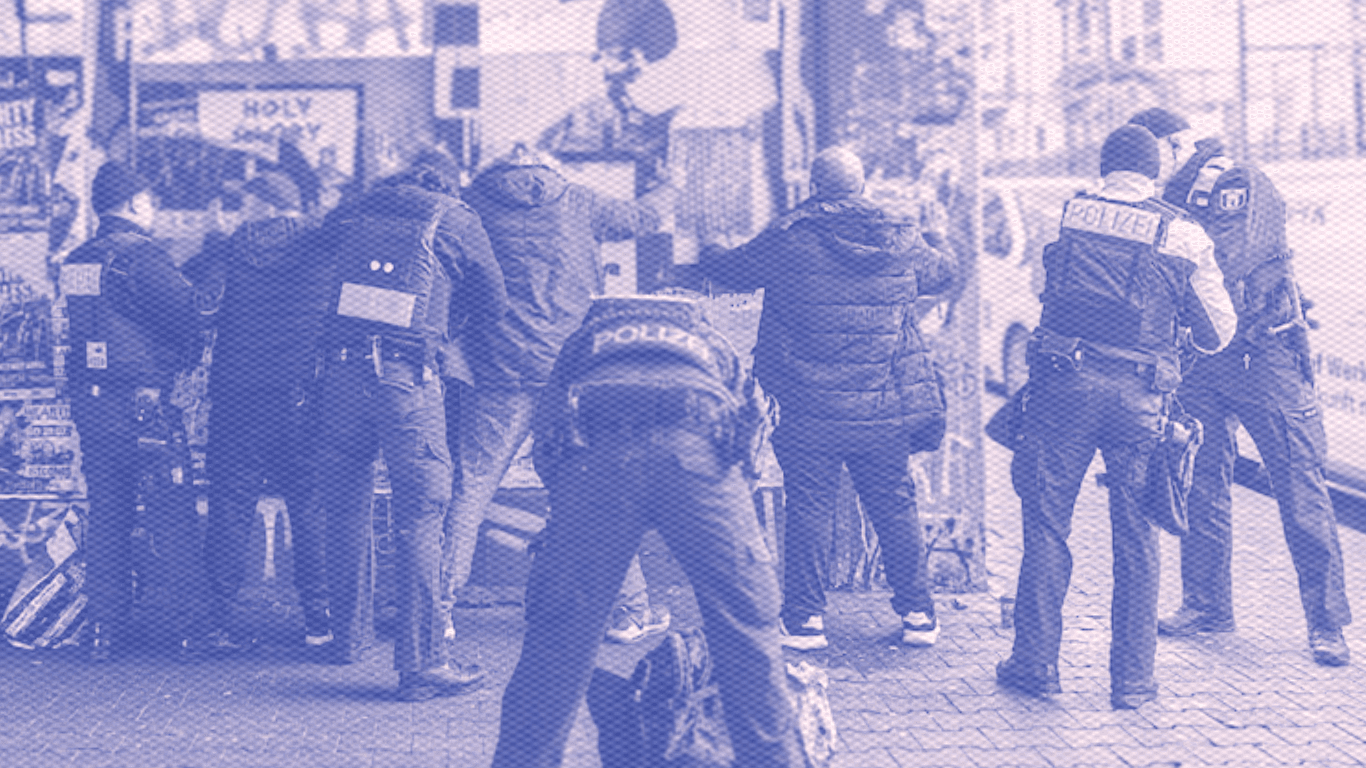
Court observations show: moral panic around “knife crime” fuels criminalization
Justice Collective
A closer look at criminal court cases involving knives reveals cases far away from the media image of violent attackers. To paint a more realistic picture, we offer case reports, analysis, and a discussion event.
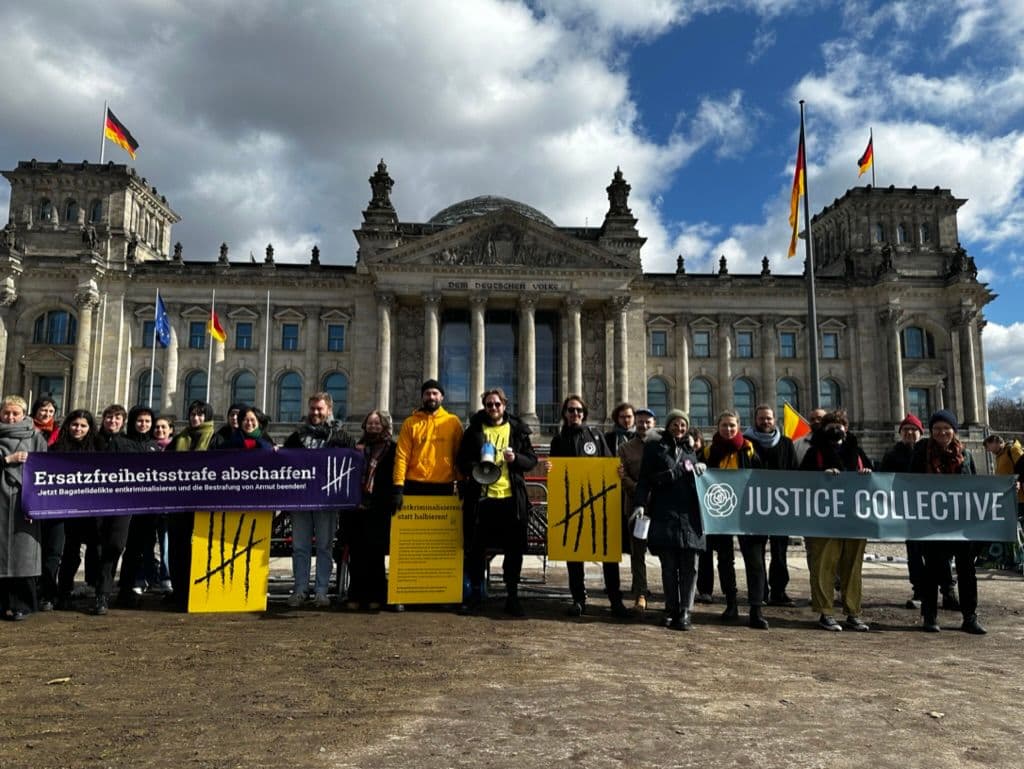
Jailing people for unpaid fines is about more than punishing poverty
Carmen Grimm, Bündnis zur Abschaffung der Ersatzfreiheitsstrafe
In Germany, people are incarcerated every day because they cannot pay a fine. Critics of this practice known as “Ersatzfreiheitsstrafe” are in agreement that a person’s economic status should not determine the severity of their sentence. The Coalition for the Abolition of Debtor’s Prisons agrees with this view – and urges critics to take a broader view attentive to the links between poverty and racism.